BYE Meaning
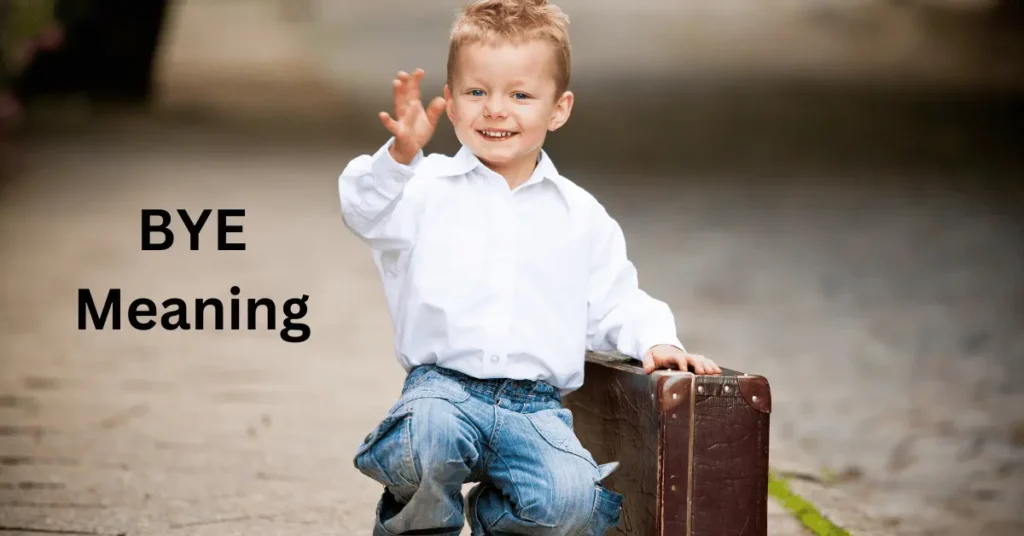
We all say it, but have you ever stopped to think about the bye meaning? It’s such a simple word, yet it carries so much weight when we part ways with someone.
“Bye” is a casual and familiar way of saying goodbye, but there’s more to this little word than you might realize.
Whether it’s used with friends, family, or even acquaintances, “bye” is an essential part of our daily conversations.
In this post, we’ll dive into the meaning of “bye,” explore where it comes from, and discover how it became one of the most common ways to say farewell.
What Does “Bye” Mean?
Bye is an interjection, a short and informal way of saying goodbye. It’s used to express farewell when someone is leaving or when a conversation or interaction is coming to an end.
Though it’s brief, “bye” carries a clear and universally understood message—it signals that you’re parting ways, whether it’s after a quick chat or a longer meeting.
The word itself is very casual and is often used in more relaxed, informal settings. It’s something you would say to friends, family, or acquaintances, and is not typically used in formal or professional contexts.
When you say “bye,” you’re acknowledging that the conversation or interaction has come to a close, and you’re ready to move on.
In many ways, “bye” is a quicker, less formal alternative to other phrases like “goodbye,” “see you later,” or “take care.”
However, despite its casual nature, it still carries the same basic meaning—it’s a way of signaling that you’re leaving or parting ways.
Interestingly, “bye” can also have different variations, like “bye-bye,” which is often used with children or in an even more casual, playful context.
In some situations, people also stretch it out for emphasis, like saying “byeeeee” to add a bit of warmth or emotion to the goodbye.
So, while it may be a short word, “bye” is essential for helping us navigate those moments when we need to say farewell, whether we’re in a rush, keeping it light, or just trying to wrap up a conversation.
Definition of Bye
“Bye” is a casual, informal word used to say “goodbye” when leaving or parting ways with someone. It’s a friendly way to end a conversation or interaction.
People use it when they are either physically leaving, like after a visit, or when they are finishing a chat, such as during a phone call or an online message.
The word “bye” comes from the older English phrase “God be with ye,” which over time was shortened to just “bye.”
It’s commonly used among friends, family, or people you are comfortable with, and is a simple way to show you’re leaving, but there’s no negative or final tone to it.
Examples of “Bye” in Sentences:
In Person:
“It was nice seeing you! Bye, take care!”
“I have to go now, bye!”
Over the Phone:
“Alright, I need to get going. Bye!”
“Thanks for chatting! Bye for now!”
In Messages:
“Gotta go! Bye!”
“See you later! Bye!”
Different Variations:
- “Bye-bye”: A more playful or affectionate version of “bye,” often used with children or close friends.
- “Okay, bye-bye! See you soon!”
- “See you”: A casual way of saying goodbye, implying you’ll see the person again.
- “I’m heading out now. See you!”
- “Take care”: A more caring way of saying goodbye, often used when wishing someone well.
- “Alright, take care! Bye!”
Overall, “bye” is a quick, easy, and friendly way to say goodbye in everyday situations!
Word Origin of “Bye”

The word “bye” has an interesting history that reflects how language evolves over time. Though it’s a simple and commonly used word today, its origins are rooted in the longer and more formal expression “goodbye.”
The term “goodbye” itself has an even deeper origin, coming from the phrase “God be with ye” or “God be with you.”
This phrase was used as a parting blessing, dating back to the 16th century in English-speaking countries.
People would say “God be with you” to wish someone well as they left, particularly in times when parting could be dangerous or uncertain.
Over time, this phrase got shortened and altered through various forms, such as “God b’wye,” “God bye,” and finally, “goodbye.”
As the language continued to evolve, English speakers began to favor shorter expressions in everyday conversation for ease and efficiency.
By the late 19th century, the word “bye” emerged as a casual, informal version of “goodbye,” retaining the same meaning of farewell but without the more formal, religious undertones.
The shift to “bye” was part of a broader trend in language where longer phrases and words were shortened or altered for convenience.
It’s similar to how modern language often embraces slang and shorthand, making communication quicker and more informal.
Interestingly, the word “bye” also made its way into other languages, especially in places where English has had a significant influence and is widely used today as an informal way to say goodbye.
This shorter version of the word, however, lacks the historical or religious context of its predecessor.
FAQs
What is the difference between “bye” and “goodbye”?
“Bye” is a shorter, more informal version of “goodbye.” While both words express farewell, “goodbye” tends to be more formal and can be used in a broader range of situations, including more serious or respectful contexts. On the other hand, “bye” is typically used in casual conversations with friends, family, or acquaintances.
Can I use “bye” in professional settings?
In most professional settings, it’s better to use more formal phrases like “goodbye,” “take care,” or “have a great day” rather than “bye.” “Bye” is considered informal and might not be appropriate in certain workplace contexts, especially in formal meetings or with senior colleagues.
Why is “bye” used instead of “goodbye”?
“Bye” is simply a shortened, more casual version of “goodbye.” It evolved as a way to make farewells quicker and easier in informal conversations. Over time, “bye” became widely accepted in everyday speech, especially among friends and family.
Is “bye” used in all English-speaking countries?
Yes, “bye” is commonly used in all English-speaking countries, though its frequency and tone might vary. In more formal settings or older generations, “goodbye” may be preferred, but “bye” is universally understood and widely used across the globe, especially in casual interactions.
Can “bye” have any variations?
Yes, there are several variations of “bye” depending on the context and tone. For example, “bye-bye” is often used with children or in a playful, affectionate way. People may also stretch it out, saying “byeee” for emphasis, or use slang versions like “see ya” or “later” in very informal settings.
Conclusion
In the end, “bye” is a simple yet powerful word that we all use to say farewell. It’s a casual and informal way of expressing goodbye, making it a go-to for everyday conversations.
Though it started as a shorter form of “goodbye,” its widespread use shows just how language can evolve over time.
Whether you’re leaving a friend or wrapping up a quick chat, “bye” remains one of the most common and easy ways to part ways.
So, the next time you say “bye,” you’ll know it’s more than just a word—it’s a part of our language’s rich history!
Extra Points
- Cultural Variations: Different countries and cultures have their own unique ways of saying goodbye. For example, in French, people say “au revoir,” while in Spanish, it’s “adiós.” Even though “bye” is most commonly used in English, it has found its way into many other languages around the world, often used in casual settings.
- Digital Communication: In today’s digital world, “bye” has taken on a new form. People often type “bye” in chats or messages, and it can even be stretched into “byeee” or “bai” to add extra warmth or playfulness. In online conversations, you might also see people using “see ya” or “later” as alternatives.
- The Power of Simplicity: One reason “bye” is so popular is its simplicity. It’s quick, easy to say, and works in almost every situation, from casual conversations with friends to texting your loved ones. This ease of use is what makes it a universal part of our everyday language.
- Emotional Connection: Even though “bye” is short, it can carry emotional weight. Whether you’re saying goodbye to someone you care about or just ending a casual conversation, it’s still a way of acknowledging that the moment has ended. Saying “bye” can sometimes feel like a small, yet significant gesture of connection.