Unicorn Meaning
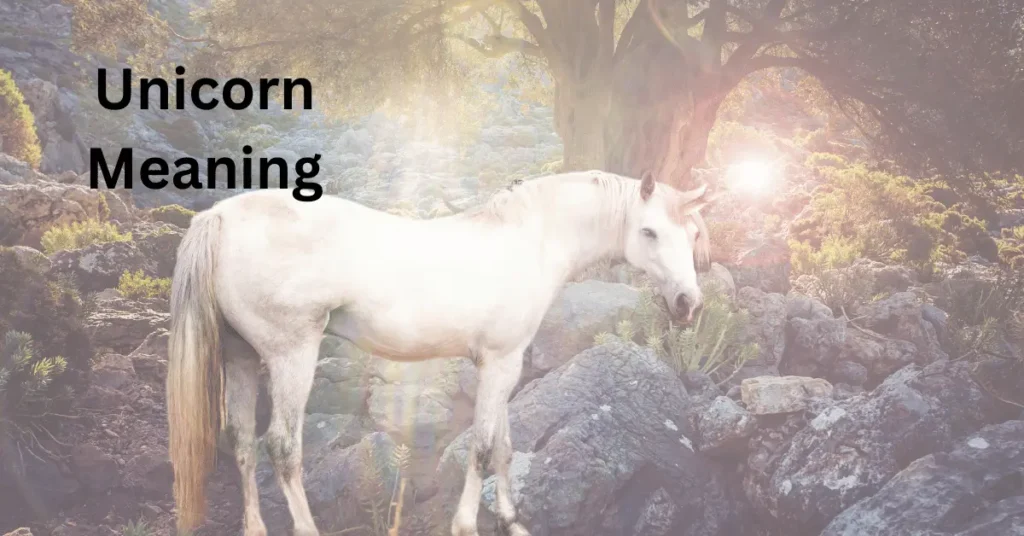
Hey there, do you know the Unicorn meaning? Unicorns have always captured our imagination with their magical charm and mystical beauty. These legendary creatures are often pictured as graceful, horse-like animals with a single, spiraling horn on their forehead.
But what does “unicorn meaning” really mean? Beyond the enchanting image of a mythical animal, unicorns hold deep symbolism in cultures around the world.
They are often seen as symbols of purity, magic, and rarity. Whether you’ve come across them in fairy tales, movies, or even modern trends, the idea of a unicorn is sure to spark a sense of wonder.
In this article, we’ll dive into the meaning of unicorns, explore their rich history, and discover what makes them such captivating figures.
What Does “Unicorn” Mean?
The term “unicorn” comes from the Latin words uni (meaning “one”) and cornu (meaning “horn”), which directly translates to “one-horned.”
This reflects the creature’s most defining feature: a single, spiraling horn on its forehead. But while the name is simple, the meaning and symbolism of unicorns are rich and layered.
In many cultures, unicorns are not just mythical animals—they represent something far deeper. Let’s break down what unicorns have come to mean over time:
- Purity and Innocence: Unicorns are often depicted as white, which is a color that symbolizes purity, goodness, and innocence in many traditions. In medieval European art, for example, the unicorn was frequently shown as a symbol of virginity and chastity. It was believed that only a pure and innocent person could tame or even approach a unicorn, further connecting the creature with ideas of purity.
- Magic and Wonder: Unicorns have long been linked to magical and supernatural realms. Their single horn is often portrayed as possessing mystical powers, like the ability to heal wounds, purify water, or protect against poisons. This magical element has made unicorns a symbol of wonder, enchantment, and the unknown. They represent a world of possibilities beyond our own, where the impossible becomes reality.
- Rarity and Uniqueness: The unicorn’s rarity—being a creature that cannot be easily found or captured—has made it a symbol of something extraordinary and unique. In many ways, unicorns stand for things that are exceptional or hard to come by, much like how some individuals or experiences in life are rare and special. The unicorn embodies the idea of something beyond the ordinary, representing the pursuit of something exceptional.
- Idealism and Aspiration: Unicorns are often seen as representations of our dreams and ideals. They symbolize things that we aspire to but may never fully attain, much like a distant star or an impossible dream. Because unicorns are creatures of fantasy and magic, they are reminders to hold on to our hopes, keep our ideals alive, and always reach for something better, even if it feels out of reach.
- Spiritual Symbolism: In some cultures, unicorns are viewed as spiritual beings with a deep connection to the divine. For example, in medieval Christian symbolism, the unicorn was often used to represent the Virgin Mary, as a pure and divine figure who embodies grace and virtue. Similarly, in Eastern traditions, unicorns are seen as protectors of the sacred and harbingers of peace and harmony.
In essence, the meaning of the unicorn goes far beyond just being a mythical animal. It embodies concepts of beauty, purity, magic, and uniqueness, making it a powerful and enduring symbol across time and cultures.
Definition and Examples of Unicorn Meaning
Definition of Unicorn Meaning
The meaning of the word “unicorn” is much more than just its literal definition. A unicorn is traditionally understood as a mythical creature resembling a horse with a single horn growing from its forehead.
It is often depicted as a beautiful, white, graceful animal, exuding purity, rarity, and magic. The word “unicorn” itself is derived from the Latin uni (meaning “one”) and cornu (meaning “horn”), literally translating to “one-horned.”
However, its significance goes much deeper than just being a horned animal—it represents several important concepts, such as:
- Purity and Innocence: Symbolized by the unicorn’s white, untarnished coat, it stands for virtue and goodness.
- Magic and Wonder: Unicorns are often associated with mystical powers, such as healing and purification.
- Rarity and Uniqueness: Unicorns are rare and elusive, symbolizing something extraordinary or hard to find.
- Idealism and Aspiration: The unicorn represents dreams, desires, and ideals that are seemingly unattainable, but always worth striving for.
While the unicorn is a creature of mythology, its meaning extends to represent ideas and values that hold significant weight across cultures and throughout history.
Examples of Unicorn Meaning in Different Contexts
- Unicorn in Mythology and Folklore: In ancient cultures, unicorns were often believed to be real, mystical creatures with special powers. For instance, in medieval European folklore, unicorns were seen as creatures of great purity. The horn of a unicorn was believed to have the power to purify poisoned water, heal illnesses, and neutralize harmful substances. This idea of purity and healing power gave unicorns a spiritual meaning, often associated with divine forces and the concept of untainted goodness. Example: A well-known story in European mythology is about a unicorn’s horn being able to cure diseases and counteract poisons, making it a highly coveted and symbolically powerful object.
- Unicorn in Christian Symbolism: During the Middle Ages, the unicorn became closely linked with Christian symbolism. The creature was often depicted in religious art and thought to symbolize Christ’s purity and divine nature. In some interpretations, the unicorn was seen as representing the Virgin Mary due to its association with purity and innocence. This symbolism added a spiritual layer to the unicorn’s meaning, making it an important figure in Christian religious art and thought. Example: In the “Hunt of the Unicorn” tapestry, which dates back to the late 15th century, the unicorn is a symbol of the Virgin Mary’s purity and was often shown being captured or tamed by a virgin, reflecting the idea that only purity could tame such a magical creature.
- Unicorn in Modern Popular Culture: In today’s world, unicorns are no longer considered real creatures but instead remain powerful symbols in modern popular culture. They represent uniqueness, beauty, and magical wonder. For example, in movies and books, unicorns are often depicted as rare creatures that possess extraordinary abilities. The Harry Potter series, for instance, features unicorns as magical beings with healing powers. Example: In the movie “My Little Pony,” unicorns are seen as characters with special, sometimes magical powers. They symbolize the theme of friendship and the idea that unique individuals bring valuable qualities to a community.
- Unicorn in Business and Technology: In the business world, the term “unicorn” is used metaphorically to describe a startup company that achieves a valuation of over $1 billion. This usage reflects the rarity and exceptional success of such companies, as reaching this status is seen as something extraordinary and difficult to achieve, much like the mythical unicorn itself. Example: Companies like Uber, Airbnb, and SpaceX are often referred to as “unicorns” in the business world because they have reached billion-dollar valuations and represent rare success stories in the startup ecosystem.
- Unicorn in Branding and Merchandise: The unicorn has become a popular symbol in branding and merchandise, especially in children’s products, toys, and even fashion. The unicorn is frequently used to market items that aim to evoke a sense of magic, fun, and fantasy. The image of a unicorn is also often associated with dreams, happiness, and a sense of wonder, which makes it an appealing symbol for brands. Example: Brands like Starbucks have incorporated unicorn-themed drinks (such as the Unicorn Frappuccino) to tap into the trend of magical, colorful products that attract attention and embody a sense of joy and playfulness.
The meaning of “unicorn” extends far beyond its literal definition.
From its symbolic representation of purity and magic in ancient myths to its modern-day use as a symbol of rarity, success, and creativity, the unicorn has evolved into a powerful cultural symbol.
Whether you encounter it in fairy tales, religious texts, business jargon, or popular merchandise, the unicorn continues to inspire awe and wonder, embodying values of uniqueness, beauty, and idealism.
Word Origin of “Unicorn”
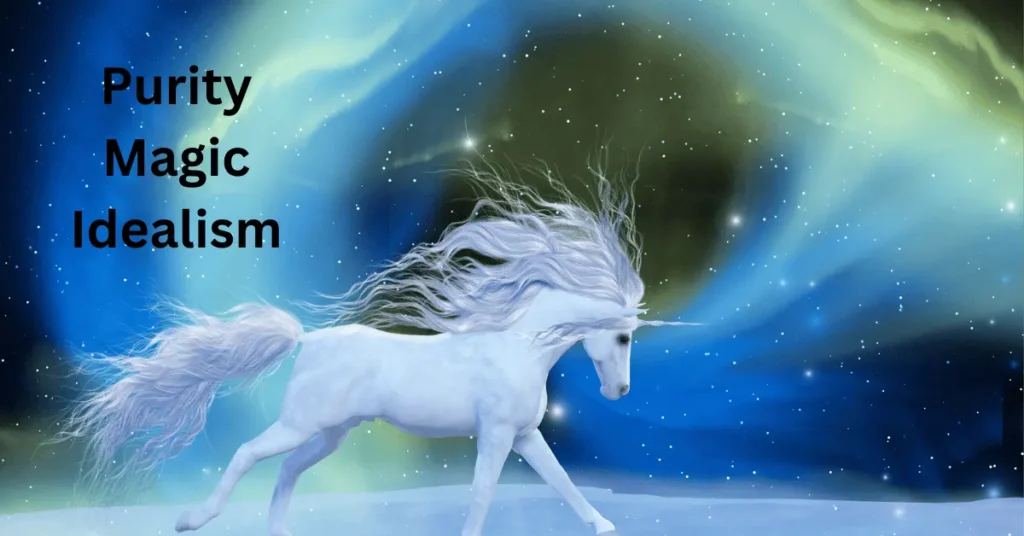
The word “unicorn” comes from the Latin language and has roots in both ancient languages and myths.
Understanding the word’s origin helps to uncover not only its linguistic meaning but also its symbolic significance across different cultures.
Let’s dive into the etymology of “unicorn” to explore its origins and how it became the term we recognize today.
Latin Roots
The word “unicorn” is a combination of two Latin words: “uni-” and “cornu.”
- Uni-: This prefix comes from the Latin word “unus,” meaning “one.” It signifies singularity or a single entity, which directly refers to the unicorn’s defining feature: its single horn.
- Cornu: The Latin word “cornu” means “horn.” In this case, it refers to the single, spiraling horn that is a prominent characteristic of the unicorn.
When combined, “unicorn” literally means “one-horned,” which perfectly describes this mythical creature.
The Latin term “unicornis” was first used around the 12th century and became more widely known through the work of writers and scholars who referenced unicorns in their myths and legends.
Medieval Influence: In medieval Europe, the Latin word “unicornis” gained popularity, and during this time, unicorns were considered real, exotic creatures.
This period saw the rise of unicorn imagery in religious and cultural contexts.
The medieval scholars and artists who used the word were heavily influenced by ancient and classical texts, which often described exotic creatures like unicorns in vivid detail.
The concept of the unicorn, especially in Christian symbolism, was commonly depicted in illuminated manuscripts, tapestries, and sculptures.
During this time, the idea of the unicorn as a real creature persisted, further cementing the term “unicorn” in the European lexicon.
Greek Influence
Before Latin usage, the idea of the unicorn was also present in ancient Greek writings.
The Greek word “monokeros” (meaning “one-horned”) was used to describe unicorn-like creatures in ancient texts, such as those written by historians like Herodotus and philosophers like Aristotle.
While these ancient Greek references didn’t use the word “unicorn” specifically, they described creatures similar to what would later be called unicorns in Western traditions.
The Greeks didn’t directly know of unicorns but referred to them in relation to other creatures they had heard about from travelers and explorers.
These creatures were often described as having a single horn, and the idea of such an animal fascinated the ancient world. The Greek word “monokeros” may have influenced later Latin interpretations of the unicorn.
Unicorn in Other Languages
The term “unicorn” spread beyond Latin and Greek into many other languages, often reflecting the creature’s singular, horned nature.
In French, the word “licorne” is used to describe a unicorn, which comes from the Old French “licorne,” derived from the Latin “unicornis.”
In Spanish, the word is “unicornio,” while in Italian, it is “unicorno.” Across these languages, the word consistently conveys the same meaning—an animal with a single horn.
Cultural Evolution of the Unicorn: While the word itself is rooted in Latin and ancient languages, the concept of the unicorn evolved in different cultures, with various names and interpretations.
The creature appeared in religious texts, ancient manuscripts, and mythological traditions worldwide, such as the Indus Valley Civilization, where the unicorn was a central motif in art and storytelling.
In the East, particularly in Chinese culture, there are similar creatures, like the Qilin, that embody traits associated with the Western unicorn, such as rarity and purity.
The Latin and Greek origins of the word “unicorn” provided the foundation for how the creature was perceived in European and Western culture, where it took on deeper meanings related to spirituality, purity, and divine power.
The word “unicorn” has a rich etymological history that stretches back to ancient languages and cultures.
Derived from Latin, the term “unicorn” directly means “one-horned,” capturing the essence of this mythical creature.
From its Greek and Latin origins to its widespread usage in medieval Europe and beyond, the unicorn has transformed from a real, mysterious animal in ancient texts to a legendary symbol of magic and rarity in modern times.
Understanding the origin of the word helps us appreciate the lasting influence of the unicorn in mythology, culture, and language.
FAQs
Are unicorns real?
Unicorns, as depicted in myths and legends, are not real. They are mythical creatures that have been part of folklore for centuries. While there have been stories of unicorn sightings in ancient times, there is no scientific evidence to support that unicorns ever existed as actual animals. They remain a symbol of magic and purity in stories and culture.
What does the unicorn symbolize?
Unicorns are often seen as symbols of purity, innocence, magic, and rarity. Their white coat and single horn represent untarnished beauty and grace. In some cultures, unicorns are also associated with healing powers, strength, and spiritual significance. They are seen as symbols of the unattainable and the extraordinary, often representing dreams and ideals.
Why is the unicorn associated with virgins?
In medieval European folklore, unicorns were thought to be pure creatures that could only be tamed or captured by a virgin. This association likely stems from the symbolism of purity and innocence, as unicorns were seen as the embodiment of these virtues. In religious and cultural contexts, the unicorn came to represent the Virgin Mary in Christianity due to its purity.
Where did the idea of the unicorn originate?
The concept of the unicorn has roots in ancient cultures, with early references found in Greek, Roman, and Chinese texts. The word “unicorn” itself comes from the Latin “unicornis,” meaning “one-horned.” While ancient Greeks and Romans didn’t know of unicorns as we imagine them today, they described one-horned creatures in their writings. Over time, the unicorn became a prominent symbol in medieval European art, literature, and religious iconography.
What is the meaning of a unicorn’s horn?
In many cultures, the unicorn’s horn was believed to possess magical properties. It was thought to have healing abilities, purify poisoned water, and protect against harmful substances. In medieval times, unicorn horns were highly prized and were often believed to be able to neutralize toxins, making them symbols of divine power and purity.
Conclusion
Unicorns have captured our imagination for centuries with their magical charm and symbolism.
From their origins as mythical creatures with a single horn to their representation of purity, magic, and rarity, unicorns continue to be a powerful and enduring symbol in culture and folklore.
While they may not be real, their meaning remains strong, inspiring wonder, hope, and the belief in the extraordinary.
Whether in ancient myths, modern stories, or even business terms, unicorns will always be a symbol of something special and unique.
Extra Points
- Unicorns in Modern Pop Culture: Unicorns are everywhere in today’s pop culture! From children’s toys to trendy merchandise, the unicorn is a symbol of fun, magic, and creativity. Companies use the image of unicorns in everything from clothing to food, creating a sense of whimsy and joy.
- Unicorns as a Symbol of Hope: Unicorns are often seen as a symbol of hope and the pursuit of something beautiful, even if it feels out of reach. They remind us to hold on to our dreams and believe in the impossible. This is why unicorns are so inspiring to people of all ages.
- The “Unicorn” in Business: In the world of business, the term “unicorn” has taken on a new meaning. It is used to describe a startup company valued at over $1 billion, making it an extraordinary and rare success in the competitive business world.
- Unicorns in Different Cultures: While the unicorn is most closely associated with Western folklore, similar creatures appear in other cultures too. In Chinese culture, the Qilin is a mystical creature often compared to the unicorn. It symbolizes good fortune and prosperity, showing how the idea of a magical, rare creature is a universal symbol of positivity.
- The Enduring Appeal of Unicorns: The appeal of unicorns is timeless. Whether you’re a child or an adult, the idea of a magical, one-horned horse still sparks imagination and wonder. Unicorns are often used in stories to represent a world of endless possibilities and beautiful, unattainable things.