Fissure Meaning

Have you ever wondered what the word fissure meaning is? It’s a term that can pop up in various situations, from nature to medicine.
In simple terms, a fissure refers to a long, deep crack or narrow hollow in something, like the surface of a rock or even inside the human body.
Whether it’s talking about a crack in the earth or a groove in the brain, understanding “fissure meaning” can help you appreciate how this concept shows up in so many parts of the world around us. Let’s dive in and explore it further!
What Does It Mean?
The word “fissure” refers to a long, deep, narrow crack or opening that appears on the surface of something.
It is often used to describe a visible separation in a solid object or structure, whether in nature or in biological systems. Essentially, a fissure represents a division, typically one that is quite significant in depth or length.
In a general sense, a fissure can be seen in many contexts, such as:
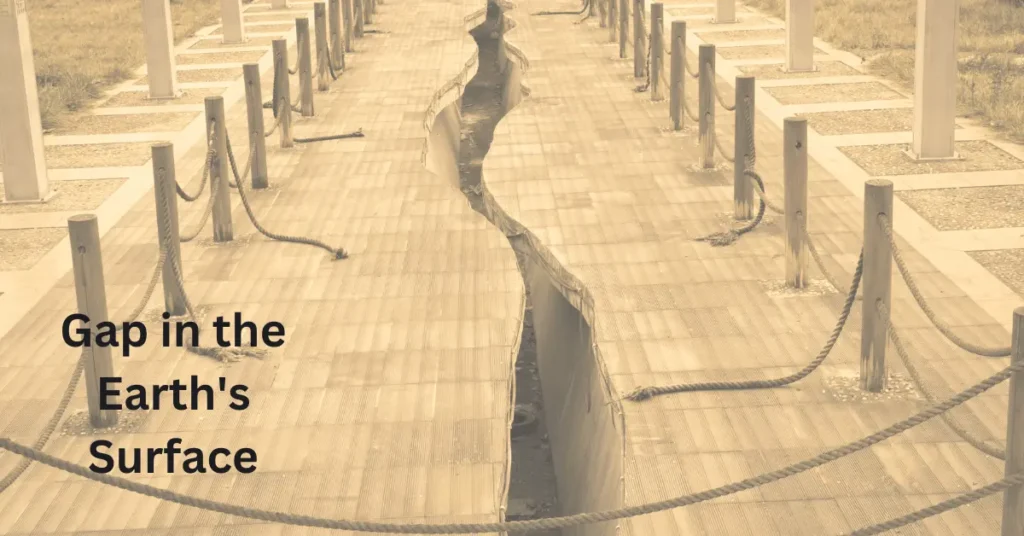
- Geological Context: A fissure might be a crack or gap in the earth’s surface, often resulting from natural forces like earthquakes, volcanic activity, or even the movement of tectonic plates. These fissures are important in understanding the Earth’s crust and how it shifts over time.
- Anatomical Context: In the field of medicine, particularly in the study of human anatomy, a fissure refers to deep grooves or clefts within the body. One of the most well-known types of fissures is in the brain. The cerebral cortex, which is the outer layer of the brain, has several fissures that help separate different lobes of the brain and are critical to understanding how the brain functions. For instance, the central fissure separates the frontal and parietal lobes.
- Skin Fissures: In another common use, a fissure refers to cracks or splits in the skin, often caused by dryness or injury. These fissures can be painful and may require medical treatment to heal properly.
Overall, the term “fissure” signifies a noticeable break, division, or separation that occurs naturally or as a result of stress, injury, or growth.
Whether it’s a geological fault line or a deep groove in the brain, fissures are an important part of both the natural and human-made world.
Definition of Fissure Meaning
A fissure is defined as a long, deep, narrow crack or opening that appears on a surface or within a structure.
It typically signifies a significant division or split that can be natural or caused by external factors. Fissures are commonly found in various fields like geology, anatomy, and medicine, each with its own specific use of the term.
The word itself conveys a sense of depth and separation, implying that the crack or hollow is not superficial, but rather extends deeper into the material or structure.
Examples of Fissure Meaning
- Geological Fissures: In geology, fissures are deep cracks or openings in the Earth’s crust that can form due to the movement of tectonic plates, volcanic activity, or earthquakes. These fissures can range in size from small cracks to large gaps in the landscape, sometimes even causing the ground to split open. Example: After the earthquake, large fissures appeared in the ground, creating dangerous cracks that were several meters deep.
- Anatomical Fissures: In anatomy, a fissure refers to deep grooves or separations within organs or structures, particularly in the brain. These fissures play an essential role in dividing different parts of the brain and allowing for specialized functions. For example, the cerebral cortex of the brain has several prominent fissures that help separate the brain’s lobes. Example: The central fissure in the brain separates the frontal and parietal lobes, which are responsible for different cognitive functions.
- Fissures in the Skin: In dermatology, a fissure can refer to a crack or split in the skin, often caused by dryness, injury, or certain medical conditions like eczema or psoriasis. These skin fissures are not only painful but can also lead to infection if not treated properly. Example: The harsh winter weather caused his hands to develop painful fissures on the fingertips, making it difficult to grip objects.
- Fissures in Rocks: In geology, fissures are also seen in rocks, where natural weathering or pressure from surrounding elements causes cracks to form. These fissures can sometimes lead to the creation of caves or tunnels in rocky terrains. Example: Over time, water erosion caused fissures in the limestone, gradually forming a small cave system.
Key Points to Remember About Fissures
A fissure is typically deep and narrow, often implying a significant break or crack.
It can be a natural occurrence (like in geological formations or the brain) or a result of external forces (such as injury or dryness in skin).
In anatomy, fissures are important structural features of organs, particularly the brain, where they help define functional regions.
Word Origin of Fissure
The word fissure traces its origins back to Latin, offering insights into its deep-rooted meaning related to splitting or dividing.
Understanding the history of the word helps in appreciating its current usage across different disciplines, from anatomy to geology.
Latin Roots: The word “fissure” comes from the Latin word “fissura”, which means “a split or cleft.” This term is derived from the Latin verb “findere”, which means “to split” or “to divide”. The idea of a fissure, therefore, revolves around the concept of separation or division, something that is cut or cracked deeply into a surface or structure.
Evolution of Usage
In its early use, “fissura” in Latin was applied to describe anything that was cleft or cracked, whether naturally or artificially.
Over time, the term started being used more specifically in various fields, including science, medicine, and geology, to describe deep cracks or divisions within various materials or living organisms.
The word gradually made its way into
English during the late Middle Ages, around the 14th century, where it continued to retain its meaning related to a deep crack or separation.
Its usage in English has remained closely tied to its original Latin roots, but has also expanded to include more specialized contexts such as in the study of the brain or geological formations.
Related Words
- Fissile: This word shares the same root and refers to something that is capable of being split or divided, such as certain materials that can be divided along natural lines.
- Fission: This term, also derived from “findere,” refers to the process of splitting, especially in physics or biology, such as the division of cells (binary fission) or the splitting of atomic nuclei in nuclear reactions.
- Modern Usage: The term “fissure” has maintained its connection to the original idea of division and splitting, and continues to be widely used in various contexts today. Whether in describing geological formations like fault lines, or in medicine to refer to deep grooves or separations in the body, its origin in Latin reflects the idea of something being divided or cracked open.
Understanding the origin of “fissure” gives you a clearer sense of how its meaning has developed and how it continues to be relevant in many fields. The concept of splitting or cracking, whether in physical matter or biological structures, remains central to its modern usage.
FAQs
What is the difference between a fissure and a crack?
A fissure is generally deeper, longer, and more pronounced than a crack. While a crack may be a smaller, more superficial break in a surface, a fissure typically refers to a more significant division that extends deeper into the material. In certain contexts, such as in anatomy or geology, a fissure is specifically used to describe a deep groove or opening.
Are fissures harmful to the body?
Fissures in the body can sometimes be harmful, depending on where they occur. For example, fissures in the skin, such as those caused by dryness or injury, can be painful and may lead to infection if not treated. However, in anatomy, fissures in the brain or other organs are natural features that help separate different regions and are not harmful. It’s important to seek medical advice if you experience painful or problematic fissures.
Can a fissure heal on its own?
In some cases, fissures can heal on their own. Skin fissures caused by dryness or minor injury may heal with proper care, such as moisturizing and avoiding further irritation. However, fissures in the brain or other internal structures generally don’t “heal” like skin; they are natural parts of the anatomy and remain as they are. Fissures in bones or organs may require medical attention if they cause complications.
What are brain fissures, and why are they important?
Brain fissures are deep grooves or indentations in the cerebral cortex, which is the outer layer of the brain. These fissures help separate different lobes of the brain, allowing for specialized functions. For example, the central fissure divides the frontal and parietal lobes. Brain fissures are essential for brain function and organization, and they play a role in how the brain processes information.
Can fissures form in rocks or the Earth’s surface?
Yes, fissures can form in rocks or the Earth’s surface due to geological processes such as tectonic activity, volcanic eruptions, or erosion. These fissures can range from small cracks to massive fault lines, and they are often associated with significant geological events like earthquakes. Fissures in the Earth’s surface can change landscapes over time and are studied by geologists to understand how the Earth’s crust shifts and evolves.
Conclusion
In conclusion, a fissure is a deep, narrow crack or opening that can appear in many different contexts, whether it’s in the earth’s surface, in the human body, or even in rocks and skin.
It signifies a division or separation, often one that is important for the structure or function of a material or organ.
While fissures can be natural and harmless, some, especially in the body, may require medical attention.
Understanding the meaning of “fissure” helps us appreciate its role in both nature and the human body, where it serves as a defining feature in many important systems.
Extra Points on Fissure Meaning
Fissures in Nature: Fissures aren’t just limited to the human body or anatomy; they’re also important in nature. For example, in volcanoes, fissures are cracks in the Earth’s surface where magma can escape during an eruption. These fissures can form large lava flows and change landscapes.
Fissures in the Brain: Brain fissures are natural and necessary for the brain’s structure. Without these deep grooves, the brain would be much smoother and less efficient. Fissures help separate different regions of the brain that are responsible for various functions, like movement, memory, and sensory processing.
Skin Fissures Can Be Prevented: Skin fissures, often caused by dryness or harsh weather, can be prevented by moisturizing regularly and protecting your skin with gloves in cold weather. Keeping your skin hydrated helps reduce the chances of painful cracks forming.
Fissures in Science and Technology: The term “fissure” has been adapted in science and technology, too. In materials science, for example, researchers study how fissures form in different materials, like metal or plastic, to improve product design and safety.
The Symbolic Meaning of Fissures: Beyond the physical meaning, “fissures” can also be used metaphorically. In literature or psychology, fissures might symbolize divisions, fractures in relationships, or emotional cracks that need healing. This shows how the idea of separation or division has a broader application.