Cheek Meaning

Have you ever heard someone say, “What a cheek!” and wondered what it really means? The phrase “cheek meaning” often pops up when someone behaves in a way that seems bold, rude, or downright disrespectful.
It’s a way to describe that audacious attitude people sometimes have, like when someone arrives late and then scolds you for being late!
In this blog post, we’ll dive into the true meaning of “cheek,” where it came from, and how you can use it in everyday conversation. Let’s explore the cheeky side of language together!
What Does “Cheek” Mean?
When we use the word cheek to describe someone’s behavior, we’re not talking about the part of their face. Instead, we’re referring to an attitude or way of speaking that is bold, disrespectful, or impertinent.
Essentially, it’s when someone does or says something that’s audacious—something that pushes the boundaries of social norms and shows a lack of consideration for others.
Imagine a situation where someone arrives late to a meeting or event and then proceeds to criticize someone else for being late.
The nerve! That’s exactly the type of behavior that would make people say, “What a cheek!” It’s a way of calling out the inconsistency or rudeness of the person’s actions in a way that feels both surprising and a little humorous.
In general, “cheek” suggests that the person has crossed a line of acceptable behavior, acting in a way that is seen as impudent or presumptuous.
The term often conveys a sense of astonishment—almost like you’re shocked by the audacity or gall of the person involved.
People often use the phrase in casual, informal conversations, and it can be said with a touch of humor or even frustration, depending on the situation.
It can refer to something minor, like someone interrupting a conversation, or something more significant, like making a rude demand without any prior politeness.
To sum it up, when we say someone has “cheek,” we’re commenting on their boldness in being disrespectful, rude, or shamelessly forward in a way that feels out of place.
Definition of “Cheek” (Meaning in Context)
In the context of behavior or speech, cheek refers to an attitude or manner of acting that is rude, disrespectful, or audacious.
When someone exhibits “cheek,” they’re often being bold or impudent, in a way that crosses social boundaries or disregards basic politeness.
The term typically conveys a sense of surprise, disapproval, or even amusement at the person’s behavior, especially when they act in a way that feels unwarranted or shameless.
The phrase “What a cheek!” is commonly used to express this idea when someone does or says something that seems excessively forward, inconsiderate, or presumptuous, especially when the action is viewed as unfair or hypocritical.
Examples of “Cheek” Meaning
Example 1:
Situation: Sarah showed up late for a dinner party, and then scolded her friends for not helping her set up the table.
Response: “She has some cheek! Showing up late and telling everyone what to do!”
Explanation: In this case, the phrase “some cheek” highlights Sarah’s rude and audacious behavior in criticizing others after arriving late herself. It’s an act that feels disrespectful and unfair.
Example 2:
Situation: John asked his colleague to cover for him at work even though he had just returned from an extended break.
Response: “What a cheek, asking me to work for him after all the time he’s taken off!”
Explanation: John’s request comes off as impertinent because it feels as though he is expecting others to do his work without a valid reason. The speaker expresses disbelief at his nerve.
Example 3:
Situation: A student criticizes a teacher’s lesson plan, even though they themselves didn’t study for the test.
Response: “The cheek of him, criticizing the teacher after not even bothering to study!”
Explanation: Here, the student’s criticism is viewed as audacious and hypocritical because they haven’t put in the effort themselves, yet feel entitled to voice an opinion on the teacher’s work.
Example 4:
Situation: A friend asks to borrow your new jacket for a special event, even though they never returned the last thing they borrowed from you.
Response: “You’ve got some cheek asking for my jacket after you didn’t give back the last thing I lent you!”
Explanation: The speaker is highlighting the boldness and inconsistency in the friend’s request, which feels disrespectful because they’ve shown a lack of consideration in the past.
Key Takeaways
- The phrase “cheek” in this context conveys surprise or disapproval toward someone’s bold, rude, or disrespectful actions.
- It is often used when someone acts in an unexpected or audacious way, especially when their behavior is seen as hypocritical or inconsiderate.
- “Cheek” implies a lack of awareness or care about social norms, and the person exhibiting it is often seen as having an overblown sense of entitlement.
Word Origin of “Cheek” (In the Context of Rudeness)
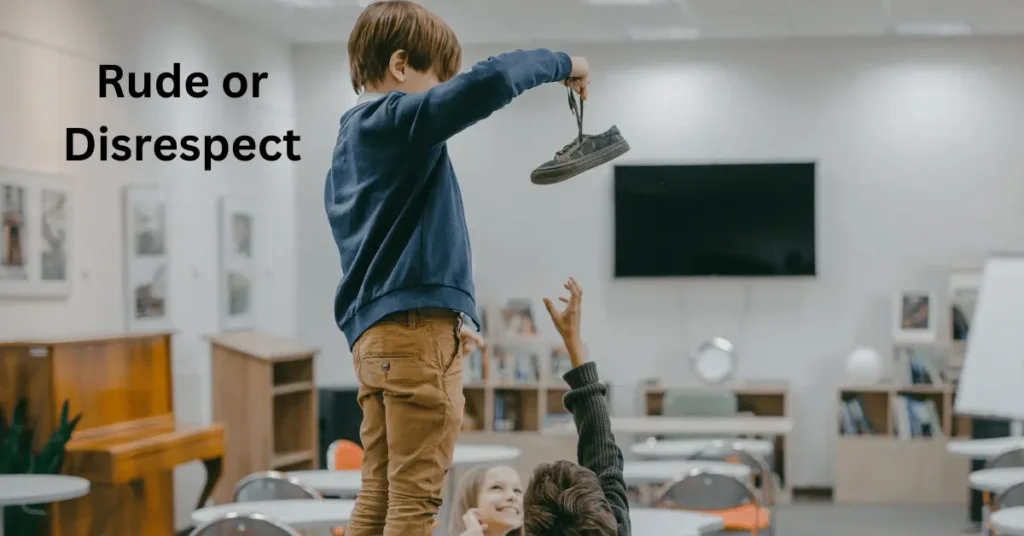
The word “cheek,” as it is used to describe rude or audacious behavior, has an interesting history that goes beyond its literal meaning of the body part. The figurative use of “cheek” to indicate impudence or bold disrespect likely stems from the idea of physical “cheekiness” or “impertinence,” where showing one’s cheek was seen as a challenge to social propriety.
Literal Origin
The word “cheek” originates from Old English ceace or ceorc, which referred to the fleshy part of the face, particularly the side of the face near the jaw or the area beneath the eyes.
It’s believed that the word was derived from the Proto-Germanic kakō, and it has cognates in other Germanic languages, like Dutch kaak (jaw) and German Kiefer (jaw).
Figurative Shift in Meaning
The figurative sense of “cheek” started emerging in English by the late 16th century, rooted in the symbolic idea that a person’s facial expression—particularly their cheek—could be used to convey boldness, defiance, or disrespect.
The cheek, in this sense, was often metaphorically linked to the act of being “cheeky” or “forward.” For example, someone who showed their cheek in a confrontation could be seen as being disrespectful or presumptuous.
In the 19th century, the phrase “to have a cheek” or “to show your cheek” began to gain popularity.
It was used to describe individuals who acted in a brazen manner, showing a disregard for social conventions and acting in ways that were perceived as overly bold or rude.
In these instances, “cheek” referred not just to the physical part of the face but also to a person’s behavior, which was often perceived as inconsiderate, improper, or out of place.
Related Phrases and Usage
The expression “What a cheek!” likely developed as a way of expressing surprise or indignation at someone’s impertinent or audacious behavior.
Additionally, the idea of “having the cheek” to do something, such as making an unreasonable request or behaving in a shameless way, suggests that the individual is “showing their cheek” in a metaphorical sense.
Evolution of the Term
Over time, the figurative use of “cheek” has become more entrenched in everyday language, and today it is commonly used in casual conversations to comment on someone’s boldness or audacity in a variety of situations.
While it can be used humorously or with lightheartedness, it often carries a sense of disbelief or disapproval, particularly when the person’s actions seem hypocritical or inconsiderate.
The evolution of the word “cheek” from a simple anatomical term to a metaphor for impudence and boldness is a great example of how language adapts and shifts over time.
The idea of “showing your cheek” has become a way to describe behavior that is both socially inappropriate and surprisingly audacious, encapsulating a sense of disregard for the usual rules of politeness or propriety.
FAQs
What does “cheek” mean when someone says, “What a cheek!”?
When someone says, “What a cheek!” they are expressing surprise or disapproval at someone’s bold, rude, or disrespectful behavior. It’s a way of commenting on how audacious or impudent someone is, especially when their actions feel inappropriate or hypocritical. For example, if a person who is always late criticizes someone else for being late, you might say, “What a cheek!” to highlight the inconsistency and rudeness of their behavior.
Is “cheek” used the same way in British and American English?
Yes, the phrase “what a cheek” and the figurative use of “cheek” are understood in both British and American English. However, the expression is more commonly used in British English in casual speech. In American English, it might not be as frequently used, but the meaning is still understood if you encounter it.
Can “cheek” ever be used in a positive or playful way?
Yes, “cheek” can sometimes be used in a more lighthearted or playful context. When someone acts “cheeky” in a charming or humorous way, it can be seen as bold or mischievous rather than rude. For instance, a child teasing their parent with a funny comment might be called “cheeky” in an affectionate way. However, in most contexts, it is used to describe behavior that is considered rude or disrespectful.
What is the difference between “cheek” and “sass”?
While both “cheek” and “sass” describe bold or disrespectful behavior, “sass” typically refers to an ongoing attitude of defiance or a brash way of speaking, often with a sense of sarcasm. “Cheek,” on the other hand, tends to describe a more specific act of rudeness or audacity, often surprising or shocking others. For example, sass might be an ongoing attitude, while cheek would refer to a particular moment of bold behavior.
How can I use the word “cheek” in a sentence?
Here are a few examples of how you can use “cheek” in a sentence:
“He had the cheek to ask me for a favor after canceling on me twice!”
“I can’t believe she has the cheek to criticize my work when she hasn’t even finished her own.”
“What a cheek! She showed up late and still had the nerve to complain about the wait.”
In these examples, “cheek” highlights a person’s audacity or rudeness, often with an implied judgment of their inconsistency or boldness.
Conclusion
In simple terms, when we talk about “cheek” in relation to behavior, we’re referring to someone’s boldness or rudeness, especially when their actions feel disrespectful or hypocritical.
It’s a way to express surprise or disapproval at someone who acts with audacity, like when they cross a line or behave inappropriately.
While “cheek” can be playful in some cases, it’s most often used to call out behavior that doesn’t respect social norms.
So, next time you hear someone say, “What a cheek!” you’ll know exactly what they mean—someone has been a little too bold or rude!
Extra Points on “Cheek”
- Common in Everyday Conversations: The phrase “What a cheek!” is often used in casual conversations. It’s a fun and expressive way to point out someone’s rudeness or audacity, especially when you’re surprised by their boldness.
- Can Be Used in a Playful Way: While “cheek” often has a negative connotation, it can also be used in a playful or lighthearted way, especially when someone does something mischievous but not truly disrespectful. For example, a child being cheeky with their parent might be seen as funny rather than rude.
- Often Implies Hypocrisy: A lot of times, “cheek” is used to call attention to inconsistency or hypocrisy. If someone acts boldly in a way that doesn’t match their behavior in the past, people might say, “What a cheek!” to point out the contradiction.
- Part of a Growing Vocabulary: The term “cheek” has become a part of many people’s vocabulary because it’s easy to use and express strong feelings in a lighthearted way. It adds flavor to everyday speech!
- Cultural Differences: Although “cheek” is more commonly used in British English, people from other countries, including the U.S., understand the meaning of the term. It’s just less common in everyday speech in places outside of the UK.