Minority Status Meaning
Let’s start learning of minority status meaning. In any society, there are different groups of people with unique characteristics, such as culture, ethnicity, religion, or even language.
Sometimes, one group is larger and holds more power than the others. This is where the concept of “minority status” comes in.
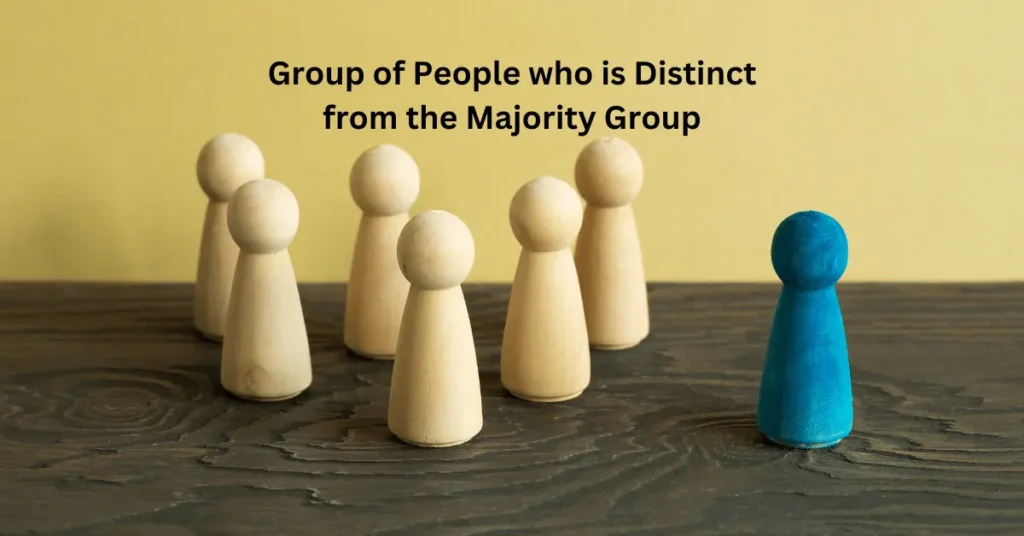
When we talk about “minority status meaning,” we’re referring to a group that is distinct from the majority group in one or more of these ways.
These groups might face different challenges or experiences because they are smaller or have different backgrounds.
Understanding what minority status means is important for creating fairer societies where everyone’s rights are recognized and respected. Let’s dive deeper into what minority status really means and why it matters!
What Does Minority Status Mean?
“Minority status” refers to a group of people who differ from the majority group in a society in one or more significant ways.
This distinction can be based on various factors, such as culture, ethnicity, religion, race, language, or even socioeconomic status.
Being in the minority doesn’t just mean having fewer people—it also means that the group often experiences different challenges, rights, and opportunities compared to the majority population.
In terms of social structure, a “minority group” may not have the same level of influence, political power, or resources as the majority.
This can lead to disparities in areas like education, employment, healthcare, and legal protection.
Minority groups may face discrimination or exclusion, which is why the recognition of their status is crucial to ensure their rights are protected and that they are treated fairly.
For example, in a country where the majority population practices one religion, a minority group following a different religion may not have the same level of access to places of worship, cultural expression, or even legal rights.
Similarly, an ethnic or racial minority may face prejudice or unequal treatment based on their identity.
Minority status isn’t just about numbers; it involves social and cultural recognition. Even if a group isn’t the smallest numerically, it might still be considered a minority due to the lack of political or economic power.
For instance, a minority can also refer to groups that hold less influence in decision-making processes, regardless of their size.
Recognizing minority status allows governments, organizations, and societies to create policies and measures that ensure these groups are not left behind and that their voices are heard.
The goal is to create a more inclusive society where everyone, regardless of their background, can thrive and be treated with dignity.
Definition and Examples of Minority Status Meaning
Definition
Minority status refers to a group of people who e distinct from the majority group in society in terms of culture, ethnicity, religion, language, race, or other defining characteristics.
This status often involves being in a numerical minority, but more importantly, it relates to the group’s experience of having less social, political, or economic power compared to the dominant or majority group.
The term also includes the societal dynamics of marginalization, where the minority group may face disadvantages in various aspects of life, such as opportunities, rights, and treatment.
Minority status is not solely based on the number of individuals in a group but on the recognition of their unique identity and the challenges they face as a result of being different from the majority.
This status is often linked with the need for specific rights, protections, and recognition to ensure equality and fairness.
Examples of Minority Status Meaning:
- Ethnic Minorities: An ethnic minority refers to a group of people who share common cultural or ancestral characteristics that are distinct from those of the larger population. For example, in countries like the United States, African Americans, Native Americans, and Hispanic Americans have historically been ethnic minorities. These groups often faced systemic discrimination, limited access to opportunities, and unequal treatment in society, making their minority status significant in the context of civil rights movements and ongoing efforts for equality.
- Religious Minorities: Religious minority groups are those whose beliefs and practices differ from the dominant religion in a society. For instance, in India, while Hinduism is the majority religion, Muslims, Christians, Sikhs, and other religious groups form minority communities. These religious minorities may face challenges related to social acceptance, access to religious practices, or legal protections. The recognition of their minority status ensures that they are granted the freedom to practice their religion without discrimination or persecution.
- Linguistic Minorities: Linguistic minorities are groups that speak a language that is not widely spoken or recognized by the majority population. A prime example of this can be found in Canada, where English and French are the official languages, but there are various indigenous languages spoken by smaller communities. These linguistic minorities may face challenges in education, public services, and cultural representation if their language is not widely supported by government policies or mainstream society.
- Racial Minorities: Racial minorities are groups whose race or physical characteristics are different from the majority group in a given society. For example, in countries like South Africa during the apartheid era, Black South Africans were the racial minority and faced severe segregation and discrimination. Similarly, in many Western countries, people of African, Asian, or Latin American descent may experience racial discrimination and inequality, making them part of a minority group in a predominantly white society.
- Sexual Orientation and Gender Minorities: Individuals who identify as LGBTQ+ (Lesbian, Gay, Bisexual, Transgender, Queer, etc.) are often considered a minority group because their sexual orientation or gender identity differs from the majority. In many societies, these individuals face unique challenges related to acceptance, legal rights, healthcare access, and social stigmas. The LGBTQ+ community’s minority status has driven movements for equal rights, including the right to marry, adopt children, and live free from discrimination.
- Disabled Persons: People with physical or mental disabilities are often considered a minority group due to the barriers they face in accessing public spaces, education, employment, and healthcare. These challenges are not necessarily related to their numbers but to the fact that their specific needs and rights may not be adequately addressed by the majority, often resulting in discrimination and social exclusion.
- Immigrant or Refugee Minorities: Immigrants or refugees who come from different countries and cultures may also be considered a minority. These groups often experience challenges related to integration, employment, and cultural acceptance in their host country. For instance, refugees from war-torn countries or economic migrants may struggle with language barriers, job discrimination, or social isolation, making their minority status an important aspect of their experiences.
In summary, minority status is about more than just the size of a group— it’s about how the group is treated and recognized in a society.
Whether it’s based on ethnicity, religion, race, language, sexual orientation, or any other defining characteristic, minority status often involves facing barriers and challenges that require specific protections and support to ensure equality and justice.
Understanding these examples helps us recognize why minority status matters and why it’s essential to safeguard the rights of these groups in any society.
History of Minority Status
The concept of minority status has evolved over centuries, influenced by social, political, and cultural shifts.
Understanding the history of minority status is essential to grasp how different groups have fought for recognition, rights, and equality, and how their status has shaped societies throughout history.
Below is a detailed look at the history of minority status:
Ancient and Medieval Periods
In ancient civilizations, minority groups were often defined by factors such as ethnicity, religion, and social class.
The treatment of these groups varied significantly depending on the power structures of the time.
For instance, in ancient Rome, conquered peoples were often treated as second-class citizens. While they maintained some cultural identity, they were subjugated under Roman rule.
Similarly, in many ancient societies, religious minorities such as Jews, Christians, and other sects were often persecuted or marginalized for their beliefs, facing social exclusion or even violence.
During medieval times, religious minorities, particularly Jews, were frequently subject to discrimination, exclusion, and violence across Europe.
In contrast, many Islamic empires, such as the Ottoman Empire, allowed religious minorities to practice their faith but still placed them in a subordinate position through the payment of a special tax and legal restrictions.
These early examples of minority status highlight the historical roots of religious and ethnic discrimination.
Colonialism and Imperialism
The colonial era, from the 15th to the 20th centuries, brought new complexities to the concept of minority status.
European powers colonized large parts of Asia, Africa, and the Americas, often treating indigenous populations and enslaved peoples as inferior or “other.”
Colonial powers imposed their own language, religion, and social norms on local populations, and minority groups within colonies were subjected to exploitation, violence, and forced assimilation.
In the United States, for example, the African American population was enslaved for centuries, making them a racial minority group.
After emancipation, despite being freed from slavery, African Americans continued to experience systemic racism and were denied equal rights, including voting, education, and access to public spaces.
Similarly, Native American groups faced forced relocation and suppression of their cultural identities.
The 20th Century and the Rise of Human Rights
The early 20th century marked a significant turning point in the history of minority status, as movements for civil rights and equality gained momentum across the world.
Following the two World Wars, particularly after World War II, global awareness of human rights grew, leading to significant changes in how minority groups were treated.
Post-World War II Developments
After World War II, the formation of the United Nations (UN) in 1945 was a critical step toward global recognition of minority rights.
The UN’s Universal Declaration of Human Rights (1948) laid the foundation for international efforts to protect the rights of minority groups.
The declaration emphasized the need for equal rights for all people, regardless of race, religion, or nationality, and highlighted the importance of protecting minority groups from persecution.
Civil Rights Movements
In the United States, the Civil Rights Movement of the 1950s and 1960s played a major role in reshaping the definition of minority status.
African Americans, who had long been subjected to legal segregation and disenfranchisement, fought for equal rights, including voting rights, desegregation, and equal access to education and employment.
Landmark legal changes, such as the Civil Rights Act of 1964 and the Voting Rights Act of 1965, were instrumental in recognizing the importance of protecting minority groups and ensuring their rights under the law.
International Efforts
During the same period, international efforts to protect minority rights gained traction.
The International Covenant on Civil and Political Rights (1966) and the International Covenant on Economic, Social and Cultural Rights (1966) were both significant milestones in recognizing the rights of minority groups.
These agreements, adopted by the UN, emphasized that individuals belonging to ethnic, religious, and linguistic minorities should enjoy their rights without discrimination.
Post-Colonialism and Independence Movements
In the mid-20th century, former colonies began to gain independence from European powers, leading to new considerations of minority rights in newly established nations.
Many countries faced the challenge of balancing the interests of the majority population with those of ethnic or religious minorities.
Countries such as India, which gained independence from British rule in 1947, sought to establish policies that protected minority rights while also promoting national unity.
The Modern Era
In the late 20th and early 21st centuries, the concept of minority status continued to evolve in response to global movements for equality and justice. Some key developments in this period include:
Recognition of Sexual and Gender Minorities
One of the most significant shifts in the modern era has been the growing recognition of sexual orientation and gender identity as forms of minority status.
LGBTQ+ individuals have historically been marginalized and persecuted, but in recent decades, there has been a growing global movement advocating for their rights.
Legal milestones such as the legalization of same-sex marriage in various countries, anti-discrimination laws, and increased visibility of LGBTQ+ individuals in media and politics have contributed to a broader understanding of minority status that includes gender and sexual minorities.
Globalization and Immigration
As the world becomes increasingly interconnected through globalization, migration and immigration have become key factors in the evolution of minority status.
Immigrants and refugees who settle in new countries often find themselves in minority status, facing cultural, linguistic, and social barriers.
In some countries, these groups have faced discrimination or hostility, while in others, there have been efforts to integrate and support them.
Indigenous Rights
The modern era has also seen a growing recognition of the rights of indigenous populations, who have long faced marginalization and loss of land and culture.
International bodies like the United Nations have adopted specific declarations, such as the UN Declaration on the Rights of Indigenous Peoples (2007), to address the unique challenges faced by indigenous minorities.
Many countries have introduced policies aimed at preserving indigenous cultures, providing land restitution, and ensuring political participation.
Ongoing Struggles for Equality
Despite progress, minority groups around the world continue to face systemic challenges.
Racial minorities, such as Black, Latino, and Asian communities, often experience discrimination in areas such as policing, housing, and education.
Religious minorities, including Muslims, Jews, and others, sometimes face prejudice and violence. Efforts to address these issues, such as through affirmative action, anti-discrimination laws, and public awareness campaigns, continue to evolve.
The history of minority status reflects the long-standing struggles of various groups to achieve recognition, rights, and equality in societies that often favor the majority.
From ancient civilizations to modern global movements, the fight for minority rights has been a critical aspect of the broader human quest for justice and fairness.
While much progress has been made, the journey toward full equality for all minority groups continues, highlighting the importance of understanding the historical context of minority status and continuing efforts to protect and empower these groups.
FAQs
What is meant by minority status?
Minority status refers to a group of people who are distinct from the majority population based on characteristics such as culture, ethnicity, religion, race, language, or other traits. This status not only relates to the numerical size of the group but also to the power dynamics and the challenges the group faces in terms of social, political, and economic equality. Groups with minority status often face marginalization or discrimination and may require legal protections to ensure their rights.
How is minority status determined?
Minority status is determined by factors such as cultural, religious, racial, or ethnic differences that set a group apart from the majority in a given society. It’s not just about being a smaller group; it also involves the social, political, and economic position of the group. For instance, minority status may be tied to the group’s lack of representation in government, education, employment, or other important sectors, which can lead to inequality or oppression.
Can a minority group ever become a majority?
Yes, over time, the composition of a population can change, and a group that was once a minority can become a majority. This can happen due to factors such as demographic shifts, immigration, changes in birth rates, or changes in societal norms. For example, immigrant groups can eventually become a significant portion of a country’s population, influencing culture, politics, and social structures.
Why is minority status important?
Minority status is important because it highlights the unique challenges and issues that certain groups face in society. Recognizing minority status allows governments, organizations, and communities to implement policies that protect the rights of these groups, ensure equal opportunities, and address discrimination. It is crucial for creating inclusive societies where all individuals, regardless of their background, are treated with fairness and dignity.
What are the rights of minority groups?
The rights of minority groups include the right to practice their culture, religion, and language without discrimination or persecution. They also have the right to equal access to education, employment, healthcare, and political participation. International human rights laws, such as the Universal Declaration of Human Rights, emphasize the need for protection and respect for the rights of minority groups, ensuring that they can live free from persecution and enjoy the same freedoms as the majority population.
Conclusion
In conclusion, minority status refers to a group of people who are different from the majority in terms of culture, ethnicity, religion, or other characteristics.
While being in the minority doesn’t just mean a smaller number, it often means facing challenges like discrimination or lack of representation.
Understanding minority status is crucial for ensuring equality and protecting the rights of all people, no matter their background.
By recognizing the importance of minority groups, societies can work toward creating fairer and more inclusive communities where everyone can thrive.
Extra Points
- Cultural Diversity: Minority groups contribute to the rich cultural diversity of a society. Their unique traditions, languages, and customs can offer new perspectives, helping to create a more vibrant and inclusive culture.
- Legal Protections: Many countries have laws in place to protect minority groups from discrimination. These laws ensure that people in minority groups have access to equal opportunities in education, work, and social participation.
- Empowerment Through Awareness: Understanding minority status is important for raising awareness about the challenges these groups face. When more people recognize these issues, they can help promote change and advocate for equality.
- Social Justice Movements: Over the years, various social justice movements have focused on improving the lives of minority groups. These movements, like the Civil Rights Movement or the LGBTQ+ rights movement, have played a crucial role in fighting for the recognition and rights of minorities.
- Global Importance: Minority status isn’t just important in one country—it’s a global issue. International organizations like the United Nations work to protect the rights of minority groups around the world, emphasizing the importance of equality for all.